Okay, SmartStep Tech Team is online. Deploying E-E-A-T framework for Bangalore apartment security...
Securing Your Whitefield Apartment: A Smart Home Security Guide for Shared Walls
Shared Wall Smart Home Security Explained
Shared wall smart home security focuses on protecting your apartment while minimizing disturbance to neighbors. Key considerations include selecting sensors that minimize false alarms due to vibrations or noise, respecting privacy with camera placement, and optimizing system settings to avoid triggering alerts for everyday activities.
Bangalore Site Story: Sound Sleep Restored in Whitefield
We recently helped Mrs. Sharma, a resident of an apartment complex near Forum Shantiniketan Mall in Whitefield. Her previous DIY security system was a nightmare. The vibration sensors, overly sensitive, would trigger alarms whenever her neighbor closed a door, causing frequent false alarms and escalating tensions. Neighbors complained, BESCOM was alerted once due to the alarm siren, and Mrs. Sharma was constantly stressed.
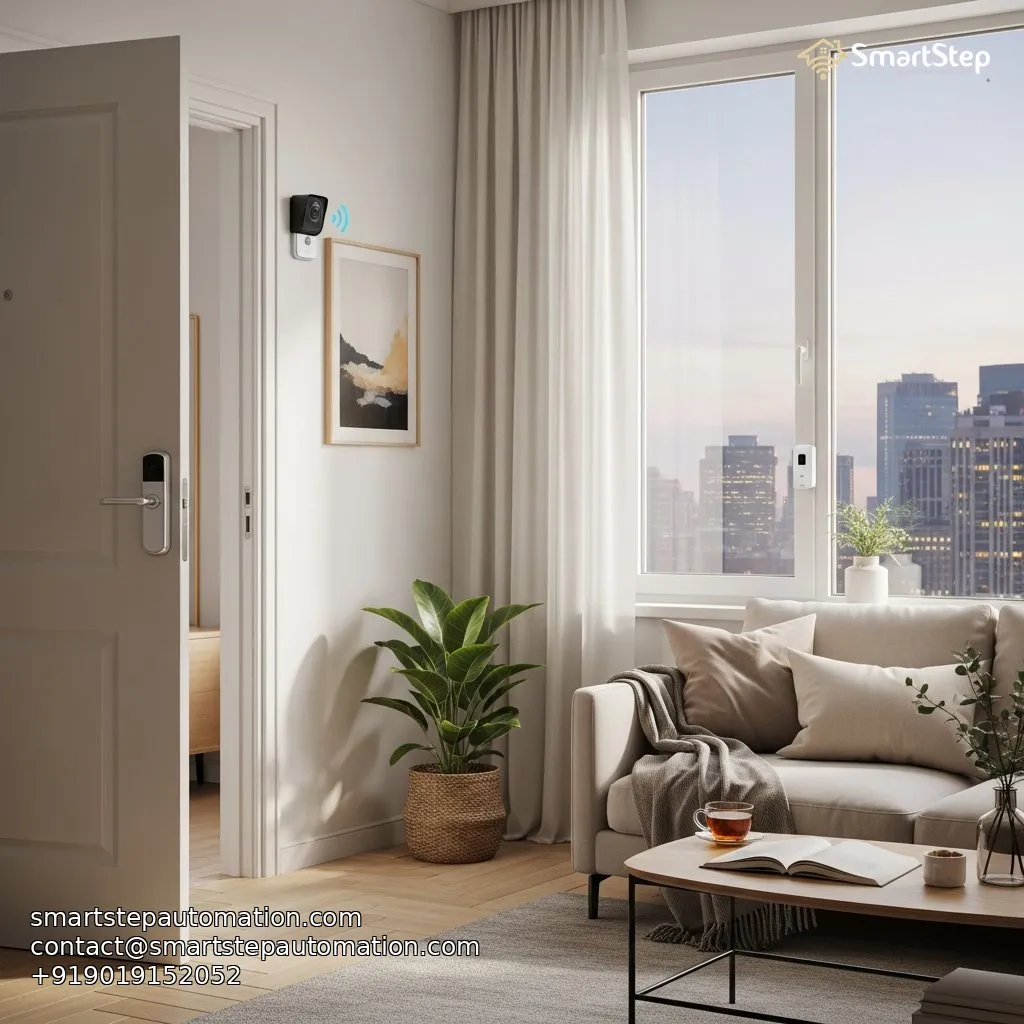
The SmartStep solution involved replacing the generic vibration sensors with advanced units featuring adjustable sensitivity levels and AI-powered noise filtering. We also strategically relocated the door sensors, using specialized adhesive mounts to minimize vibration transfer. The result? Zero false alarms in two months, harmonious relationships with neighbors, and a good night's sleep for Mrs. Sharma. #SmartHomeBangalore
Assessing Your Apartment's Security Vulnerabilities: A Checklist
Before investing in a smart security system, conduct a thorough assessment of your apartment's vulnerabilities. This helps you prioritize the right features and sensor types.
- Entry Points:
- Are your doors solid core or hollow? (Hollow doors are easier to breach.)
- Are the door frames sturdy and properly installed?
- Does your balcony door have a reliable locking mechanism?
- Are your windows easily accessible from outside (e.g., ground floor, near fire escapes)?
- Are your window latches secure?
- Consider the ease with which someone could access your apartment's exterior (e.g., climbing pipes, adjacent balconies)
- Shared Walls & Ceilings:
- Can you easily hear conversations or other noises from neighboring apartments? This indicates poor soundproofing.
- Are there any visible cracks or gaps in the walls or ceilings that could transmit vibrations?
- Common Areas:
- Is the building's main entrance secure (e.g., gated, security guard, CCTV)?
- Are the hallways well-lit and monitored?
- Is there a functional intercom system?
- Digital Security:
- Is your Wi-Fi network password protected and strong?
- Have you enabled two-factor authentication on all your smart home accounts?
Addressing these vulnerabilities forms the foundation of a robust security plan tailored for Bangalore apartment living.
Choosing the Right Vibration Sensors: A Comparative Analysis
The key to avoiding neighbor disturbances lies in selecting vibration sensors that strike the right balance between sensitivity and false alarm prevention. Here’s a breakdown of different technologies:
| Sensor Technology | Sensitivity Level | False Alarm Rate | Pros | Cons | Best Use Cases |
|---|---|---|---|---|---|
| Piezoelectric | High | Moderate to High | Highly sensitive, quick response time | Prone to false alarms from everyday vibrations (e.g., doors slamming, heavy footsteps) | Ideal for solid doors/windows, requires careful calibration |
| Accelerometer-Based | Adjustable | Low to Moderate | Can be calibrated for specific vibration patterns, more resistant to false alarms | Less sensitive than piezoelectric sensors, may miss subtle intrusion attempts | Good for shared walls, doors, and windows where some vibration is expected |
| Glass Break Detectors (Acoustic) | N/A | Low | Detects the specific frequency of breaking glass, very low false alarm rate | Requires clear line of sight to the glass, ineffective for other types of intrusion | Specifically for windows and glass doors |
| MEMS (Micro-Electro-Mechanical Systems) | Adjustable | Low | Detects vibrations via AI learning of what is normal or suspicious vibration activity | Not 100% resistant to false alarms, especially in noisy areas. | Ideal for doors, windows, walls where noise is often apparent. |
SmartStep Tech Tip: We often combine accelerometer-based sensors with AI-powered algorithms to learn the "normal" vibration patterns of a building. This reduces false alarms and improves overall system reliability.
Optimizing Camera Placement & Audio Recording: Respecting Privacy
When installing smart cameras and audio recording devices, it's crucial to respect your neighbors' privacy and adhere to local regulations.
- Camera Placement: Avoid pointing cameras directly at neighboring apartments or common areas where residents have a reasonable expectation of privacy. Focus on your own property and entry points. Ensure your camera setup doesn't violate any society guidelines within your complex, like the Prestige Shantiniketan.
- Audio Recording: Be aware of local laws regarding audio recording. In many jurisdictions, it's illegal to record conversations without consent. If you choose to enable audio recording, consider its necessity and potential impact on privacy.
- Transparency: Inform your neighbors about the presence of security cameras and their purpose. This can help build trust and prevent misunderstandings. Many residents of Sobha Dream Acres often have discussions on resident forums about camera placement.
- Consider a video doorbell: Instead of strategically placing cameras to capture all activity, install a video doorbell. These cameras often have built-in motion sensors, and are placed directly above your front door. This limits the range to immediate proximity and respect neighbor's privacy.
Real User Math: Calculating the ROI of Smart Security
Let's analyze the potential cost savings of a smart security system versus the potential losses from a burglary.
Scenario: You live in a 3BHK apartment in Brigade Metropolis, Whitefield.
Potential Losses from Burglary:
- Electronics (TV, laptops, smartphones): ₹150,000
- Jewelry: ₹200,000
- Cash: ₹20,000
- Damage to property (broken door, window): ₹10,000
- Total Potential Loss: ₹380,000
Cost of Smart Security System (Comprehensive Package):
- Equipment (sensors, cameras, control panel): ₹30,000
- Professional Installation: ₹5,000
- Monthly Monitoring Fee (optional): ₹1,500
- Total First Year Cost: ₹53,000 (including 12 months monitoring)
ROI Analysis:
Preventing a single burglary saves you ₹380,000. Even with a relatively comprehensive system and monitoring, the ROI is significant. Furthermore, the peace of mind and reduced insurance premiums (some insurers offer discounts for smart security systems) add further value. The additional features often are very useful: some systems now include smart integrations with lights and even curtains, which can provide additional security, deterring potential break-ins by simulating activity inside of the apartment.
Conclusion: Smart Security, Smart Living in Bangalore
Investing in a well-designed smart security system is a wise decision for Bangalore apartment dwellers. By carefully selecting sensors, respecting privacy, and optimizing system settings, you can protect your property and enjoy peace of mind without disrupting your neighbors. SmartStep Tech is here to guide you through the process, providing tailored solutions and expert installation services. #SmartHomeBangalore
Ready to Automate?
SmartStep designs systems that grow with you.