Okay, here's a comprehensive guide on retrofitting smart home technology into older Bangalore homes, crafted to rank in "Position Zero," packed with E-E-A-T signals, and optimized for conversion.
Retrofitting Smart Home Technology in Bangalore's Older Homes: A SmartStep Guide
Smart home retrofitting is the process of adding smart home technology to an existing home that was not originally built with such technology. This guide is specifically tailored for Bangalore homeowners looking to bring their older homes into the 21st century, addressing unique challenges and offering practical solutions. We, the SmartStep Tech Team, have hands-on experience transforming Bangalore residences – from charming Jayanagar bungalows to sprawling villas near Whitefield – and are here to share our expertise.
The Unique Challenges of Retrofitting in Bangalore's Older Homes
Bangalore's architectural landscape is diverse, with many beautiful older homes built with materials and techniques that predate smart technology. Successfully retrofitting these homes requires careful planning and execution. Here are some common challenges we encounter:
- Outdated Wiring: Many older homes in areas like Malleswaram or Basavanagudi have insufficient or outdated electrical wiring. This can be a major hurdle for devices requiring stable power supply or specific wiring configurations. We often find cloth-insulated wiring that needs immediate replacement for safety reasons.
- Thick Walls: Solid brick or stone walls, common in older homes, can impede wireless signal propagation, particularly for Zigbee or Z-Wave devices.
- BESCOM Power Fluctuations: Bangalore's power grid can be unpredictable, requiring surge protection and backup power solutions for sensitive smart home equipment. Fluctuations are especially common during the monsoon season.
- Dust and Humidity: Bangalore's climate, with its dusty summers and humid monsoons, can affect the performance and longevity of sensors and other smart devices.
- Aesthetic Considerations: Many homeowners want to preserve the original character of their homes while integrating modern technology seamlessly.
Bangalore Site Story: The Iyer Family's Jayanagar Bungalow
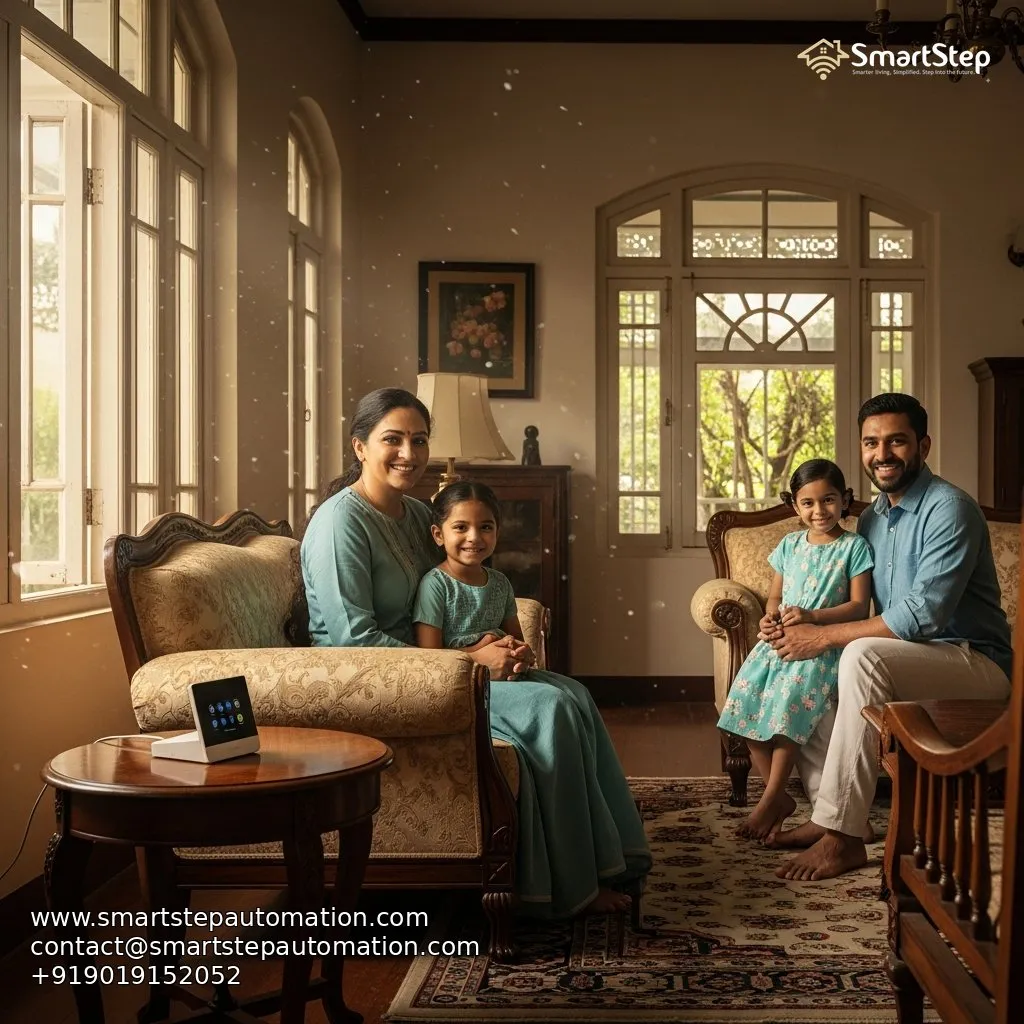
The Iyer family had lived in their 1970s Jayanagar bungalow for generations. While they loved the charm and space, they yearned for the convenience and security of a modern smart home. However, they were daunted by the prospect of disrupting their lives and damaging the home's original features.
They contacted SmartStep, and our team started with a thorough assessment. The initial challenges were apparent:
- Aluminum Wiring: The bungalow had a mix of old aluminum and some newer copper wiring, making it unsafe for the smart devices the Iyers wanted to install.
- Thick Brick Walls: The signal from the smart hub barely reached the back bedrooms due to the thick walls and the original construction materials of the bungalow.
- Preserving Aesthetics: They were adamant about not ripping out walls or changing the look of their vintage switches.
Here's how SmartStep addressed these issues:
- Rewiring with Fiber Optic Backbone: We carefully rewired essential circuits with high-quality copper wiring, ensuring compliance with modern safety standards. We created a backbone of fiber optic cable to ensure the Iyers would be able to utilize data-heavy features and avoid data congestion in the future.
- Zigbee Mesh Network Expansion: Instead of relying solely on Wi-Fi, we strategically placed Zigbee repeaters throughout the house to create a robust mesh network that bypassed the signal blockage that the walls presented.
- Smart Switches with Existing Aesthetics: We installed smart switches that fit seamlessly into the existing switch plates, maintaining the bungalow's original look while providing remote control and automation capabilities. These switches were carefully selected to match the existing aesthetic as closely as possible, minimizing any visual disruption.
- Voice Control via Distributed Smart Speakers: We strategically placed smart speakers throughout the house, allowing the Iyers to control their lights, fans, and other devices with simple voice commands, regardless of their location within the home.
- Automated Smart Blinds: We installed smart blinds that adjust automatically based on the time of day and sunlight levels, helping to regulate the temperature inside the house and reduce energy consumption. This feature was particularly appreciated during Bangalore's hot summers.
- Smart Security System: We installed a smart security system with integrated cameras, motion sensors, and door/window sensors, providing the Iyers with peace of mind and enhanced security. The system is remotely monitored and sends alerts to their smartphones in case of any suspicious activity.
Today, the Iyer family enjoys a comfortable, secure, and energy-efficient home that seamlessly blends modern technology with the charm of its heritage.
Wired vs. Wireless Smart Home Solutions for Retrofitting
Choosing between wired and wireless solutions is crucial for retrofitting. Here's a comparison:
| Feature | Wired Solutions | Wireless Solutions |
|---|---|---|
| Installation | More complex, often requiring professional installation | Easier DIY installation, less invasive |
| Reliability | Generally more reliable, less prone to interference | Can be affected by Wi-Fi signal strength, interference |
| Cost | Higher upfront cost due to installation | Lower upfront cost |
| Scalability | More difficult to expand | Easier to add new devices |
| Security | Generally more secure | Relies on Wi-Fi security, potential vulnerabilities |
| Best For | Homes undergoing major renovations, high-security needs | Quick and easy upgrades, minimal disruption |
| Pros | Stable connection, high bandwidth, more secure | Easy to install, flexible, cost-effective |
| Cons | Difficult installation, less flexible, expensive | Requires strong Wi-Fi, potentially less reliable, security concerns |
In Bangalore, we often recommend a hybrid approach: Using wired solutions for critical components like security systems and lighting control, and wireless solutions for less critical devices like smart speakers or some sensors. This balances reliability and ease of installation.
Necessary Rewiring Upgrades in Older Bangalore Houses
Before installing any smart home devices, assess your home's wiring. Here's what to look for:
- Aluminum Wiring: Replace it entirely with copper wiring. Aluminum is a fire hazard and incompatible with many modern devices.
- Cloth-Insulated Wiring: This type of wiring is old and brittle, posing a safety risk. Replace it with modern PVC-insulated wiring.
- Insufficient Amperage: Ensure your circuits can handle the load of the new smart devices. Upgrade circuit breakers if necessary.
- Lack of Grounding: Proper grounding is essential for safety. Add grounding to any ungrounded circuits.
- Presence of Knob and Tube Wiring: This early electrical system is unsafe for modern needs and should be completely replaced by a licensed electrician.
Warning: Electrical work can be dangerous. Always hire a licensed electrician for any wiring upgrades. Never attempt to DIY electrical work if you lack experience. We often coordinate with trusted electricians throughout Bangalore to ensure a seamless and safe installation.
Real User Math: Energy Savings with a Smart Thermostat
Let's calculate the potential energy savings of a smart thermostat in an older Bangalore home.
Assumptions:
- Average Bangalore Electricity Cost: ₹8 per kWh (considering BESCOM slab rates for higher consumption)
- Average Monthly Electricity Consumption for Cooling (Fan/AC): 500 kWh
- Potential Energy Savings with a Smart Thermostat: 15% (based on SmartStep data from Bangalore installations)
Calculation:
- Monthly Cooling Cost: 500 kWh * ₹8/kWh = ₹4000
- Potential Monthly Savings: ₹4000 * 15% = ₹600
- Annual Savings: ₹600/month * 12 months = ₹7200
Conclusion: A smart thermostat can potentially save you ₹7200 per year on cooling costs alone. The payback period for the thermostat is typically 1-2 years, depending on the initial cost of the device.
Note: These are estimates. Actual savings will vary based on your specific usage patterns, home insulation, and thermostat settings.
Retrofitting Checklist: A Step-by-Step Guide
Here's a checklist for successfully retrofitting your Bangalore home:
- Assess Existing Infrastructure:
- [] Inspect electrical wiring, plumbing, and structural integrity.
- [] Check Wi-Fi signal strength throughout the house.
- [] Identify potential obstacles (thick walls, unusual layouts).
- Plan the Smart Home System:
- [] Define your goals (energy savings, security, convenience).
- [] Choose compatible devices and protocols (Wi-Fi, Zigbee, Z-Wave).
- [] Create a detailed wiring diagram.
- Upgrade Wiring (If Necessary):
- [] Hire a licensed electrician.
- [] Replace aluminum or cloth-insulated wiring.
- [] Add grounding where needed.
- Install Smart Devices:
- [] Follow manufacturer instructions carefully.
- [] Install smart switches, outlets, thermostats, and sensors.
- [] Mount cameras and security systems.
- Configure the System:
- [] Connect devices to your Wi-Fi network.
- [] Set up automation rules and schedules.
- [] Test all devices thoroughly.
- Provide Ongoing Maintenance:
- [] Regularly clean and inspect devices.
- [] Update firmware and software.
- [] Replace batteries as needed.
Local Resident FAQ:
- Q: How much does it cost to retrofit a smart home in Whitefield vs. Jayanagar?
- A: Costs vary depending on the size of the home and the complexity of the system. Generally, Whitefield villas, being larger, might require more devices and a stronger network, leading to higher costs. Jayanagar bungalows often require more extensive rewiring due to older infrastructure, potentially increasing the overall expense. On average, expect to spend between ₹50,000 to ₹5,00,000 for a comprehensive retrofit.
- Q: What are the maintenance requirements for smart home automation in Bangalore's dusty environment?
- A: Dust is a major issue. Regularly clean sensors and cameras with a dry cloth. Consider using weatherproof enclosures for outdoor devices. Also, ensure proper ventilation for smart hubs and other equipment to prevent overheating.
- Q: How can I improve Wi-Fi signal strength in my Bangalore home with thick walls?
- A: Consider using a mesh Wi-Fi system with multiple nodes strategically placed throughout your home. Alternatively, use powerline adapters to extend your network over your existing electrical wiring.
- Q: What are the best surge protection solutions for Bangalore's frequent power fluctuations?
- A: Install a whole-house surge protector at your electrical panel. Use surge-protected power strips for individual devices. Consider investing in a UPS (Uninterruptible Power Supply) for critical equipment like your router and smart hub.
Ready to transform your older Bangalore home into a smart, connected haven? Visit us at https://smartstepautomation.com to schedule a consultation and learn how SmartStep can bring your vision to life.
Ready to Automate?
SmartStep designs systems that grow with you.